
About the book
What is the role of bicarbonate (HCO₃⁻) in acid-base balance? The answer is easy: none! If pH or [H⁺] is what we want to understand, the less said about HCO₃⁻ the better.
What then determines pH or [H⁺] in body fluids? Understanding acid-base balance means having clear answers to this question, and the quantitative analysis in this book supplies them. They are astonishingly simple! Over four decades ago, Peter Stewart published his classic work on the quantitative approach to acid-base. Treasured by many, despised by some, it has become the method of choice for those that want to truly understand acid-base.
This fully revised third edition, known as the “black bible” of acid–base, retains Stewart’s original, unabridged writings and adds 20 chapters by world-renowned clinicians and researchers. These cover recent advances in acid–base medicine and physiology in the same clear, concise style, with extensive focus on practical clinical application of the Stewart approach across virtually every medical specialty, including a step-by-step bedside tutorial illustrated with many case examples.
Dedicated to the legacy of Peter Stewart, Luciano Gattinoni and Rinaldo Bellomo, this book is recommended for everyone that seeks to understand, apply, or practice acid-base medicine and physiology. This includes consultants, fellows, and residents in critical care medicine, anesthesiology, internal medicine, emergency medicine, and surgery; physicians in other branches of medicine; physiologists; veterinarians; bioscientists; and medical students.
Key Features:
- Easy to read: simplifies acid-base medicine for better understanding
- Classic text: includes Stewart’s "How to Understand Acid-Base"
- Updated content: covers the latest in quantitative acid-base medicine
- Clinical focus: highlights practical use with many example cases
- Clear visuals: includes many figures and tables to clarify key points
Not convinced yet? Try before you buy:
In Memory of Luciano Gattinoni
(by Dr. Thomas Langer, Milan, Italy)
Prof. Luciano Gattinoni passed away in December 2024. He left behind not only a global legacy in the fields of respiratory pathophysiology, mechanical ventilation and extracorporeal membrane oxygenation, but also a quieter, deeply personal passion for acid-base physiology. Though less known for this aspect of his work, he often said that in his entire professional life, he set aside one month each year to study acid-base. Not because he had to — but because he wanted to. It was, to him, one of the most intellectually fascinating and conceptually demanding topics in medicine.
I remember him sitting in his office with students, residents, and mentees — sometimes surrounded by books, scribbling equations, redrawing graphs from old physiology papers. The goal was never just to write a paper, solve a complex case. It was to understand. Published data were not conclusions, but invitations to ask better questions. Teaching, for him, was always an act of curiosity. “Explain it to me like I’m five years old,” he would often say. Not to mock — but to challenge. If you couldn’t explain a concept in simple terms, you had not really understood it, he thought. And when it came to acid-base, this was precisely the problem: too often it was memorized, never truly grasped. This is why he became such an advocate for the physicochemical approach developed by Peter Stewart. It offered — in his words — “not a different solution, but a different understanding.”
In 2014, he launched a course at the SMART meeting in Milan with a title that reflected his approach: “Acid-Base Equilibrium: to remember, you need to understand…” It was more than a slogan — it was a declaration of purpose. From those first sessions, the course evolved, reaching international audiences through the International Fluid Academy in Amsterdam and Antwerp, and later through the annual Summer School in Prague, organized by Frantisek Duska. Whenever possible, he took part — often arriving by car, quietly sitting through full days of lectures, asking questions, engaging with faculty and students. People were always struck by his presence. Not by how much he spoke, but by how attentively he listened.
Though he strongly supported the Stewart approach, he was never dogmatic. At the end of his talks, he would often project an optical illusion: from one angle, a young woman in a fur coat; from another, an old lady with a hooked nose; from yet another, a man with a thick mustache. “This,” he would say, “is what acid-base approaches are like. We’re all looking at the same picture — just from different perspectives.” For him, science was not about choosing sides, but about seeing clearly.
When a day ended with an unanswered question, he would look at you and say: “How can you go home? How will you sleep tonight?” Not to provoke guilt, but to convey the quiet obsession of a true scientist — someone who believed that our duty is not just to treat the patient, but to read what he called “the beautiful and mysterious book of nature” and try to understand why things happen.
His foreword remains in this edition, just as his questions, insights, and passion remain with all of us who learned beside him. This book — and the approach it describes — was one of the things he most believed in. Understanding, he taught us, is not something you inherit. It’s something you work for — day after day, graph after graph, question after question.

In Memory of Rinaldo Bellomo
(by Dr. James Figge, Punta Gorda, FL, USA)
Professor Rinaldo Bellomo - a renowned international expert on sepis and critical care medicine was an ardent supporter of the Stewart model of acid-base balance. In medical school, Rinaldo was frustrated with the traditional concepts of acid-base and felt that “they never made sense or explained anything”.
Rinaldo was first introduced to the Stewart model when he arrived in Pittsburgh in 1992. After reading the work of Vladimir Fencl and colleagues at Harvard, who had refined the model to include albumin and phosphorus species, Rinaldo concluded that the Stewart / Fencl approach made “enormous sense”. Eager to apply these concepts in the critical care setting Rinaldo collaborated with his trainee, Dr. Moritoki Egi, to compile a massive – over 12,000 biochemical profiles from critically ill patients – coined the “mega-Stewart database”. Key insights from this dataset are discussed in in Chapter 11 and associated references. A particularly significant finding was that each 1.0 g/dL of human serum albumin carries a net negative charge of 2.4 mEq/L, which is consistent with other published models. The ‘albumin-corrected’ anion gap was then shown to have a sensitivity of 93\% in detecting lactate levels > 4.0 mEq/L. The Stewart / Fencl model has since been further refined to include globulins, enabling it to accurately predict acid-base phenomena across a wide range of pathological conditions. These insights bring us closer to Professor. Bellomo’s vision to develop a deeper, more complete understanding of acid-base so that it can be applied to the care of critically ill patients. In his own words, Rinaldo reminds us: “It is important for us to answer the question, and question the answer.”
In Memory of Peter Stewart
(by Prof. John Kellum, Pittsburgh, PA, USA)
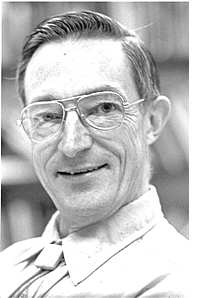
Peter A. Stewart was born and raised in Winnipeg, Manitoba. His undergraduate education was at the University of Manitoba where he graduated with honors in 1943. He was a radar officer in the Canadian Navy during WWII and later attended the University of Minnesota where he received a M.S. in physics and mathematics in 1949 and a Ph.D. in biophysics in 1951. Dr. Stewart was a charter member of the Biophysical Society and a Markle Scholar in academic medicine. He began his academic career at the University of Illinois, first in the Department of Physiology, then at Neuropsychiatric Institute as an Assistant Professor of Neurophysiology. In 1954 he moved to Emory University where he became an Associate Professor of Physiology, Physics and Biometry. While on sabbatical at the Brookhaven National Laboratory he became a molecular biologists as well. Indeed, in the words of one of his colleagues, Pierre Galletti, M.D., Ph.D., 'he could teach any component of the physiology courses for medical and dental students, and be an effective advisor for a wide variety of graduate students, several of whom now occupy senior positions at major universities.'
In 1965 Peter Stewart joined Brown University as Professor of Medical Science. He worked to develop a curriculum in which mathematics, physics, chemistry and biology were taught as a unified science and centered on the application of mathematical and analytical methods to the regulation of physiological systems. From 1977 to 1983, Dr. Stewart served as Director of the Commonwealth Fund Interface Program where generations of students were taught how to blend scholarly discipline with humanitarian pursuits. Upon his retirement, together with his wife and fellow scientist, Babette Stewart, a prize was established by the Program in Liberal Medical Education to honor the students who best exemplify the values they promoted through their own dedication to a science-based liberal education. Peter Stewart served as a consultant to the Human Factors Group of the Lockheed Aircraft Corporation, and was for many years a member of the NIH Committee for the Medical Scientist Training Program and also a member of the National Institute of General Medical Sciences Research Career Award Committee.
Dr. Stewart's interest in Acid-base Physiology grew out of his commitment to teaching and his unified approach to science. In 1981, his landmark book on 'How to understand acid-base physiology,' was published by Elsevier.
In 1983, Peter Stewart retired to Orcas Island in the Strait of Juan de Fuca near Seattle WA. He suffered from heart failure and ventricular arrhythmias but none the less devoted his retirement years to public service. He was a founding trustee of the Eastsound Public Library on Orcas Island and was also a member of the County Water Advisory Committee. Although passionate in his dual commitment to excellence in science and in community endeavors, Peter Stewart is best remembered by his colleagues and friends for his ready smile, gentle manner, musical talents, informal style and unfailing sense of humor. He enriched the lives of those around him with his consistent cheerfulness and eternal optimism.
Team
Meet the enthousiasts behind acidbase.org.
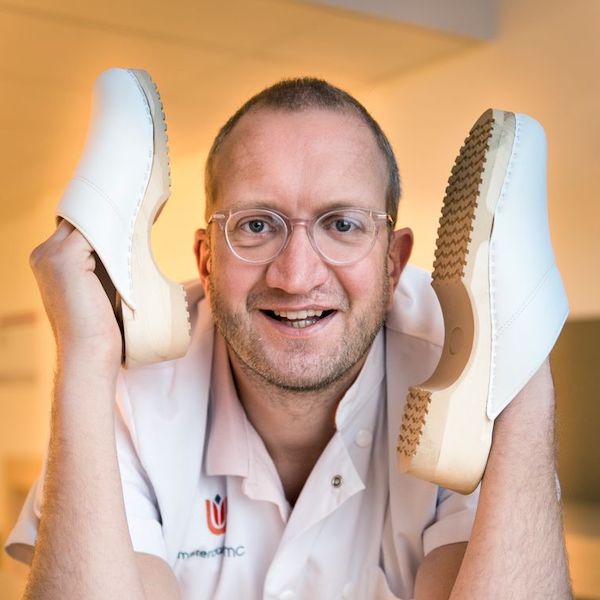
Paul Elbers, MD, PhD, EDIC
Intensivist at Amsterdam UMC,Amsterdam, The Netherlands
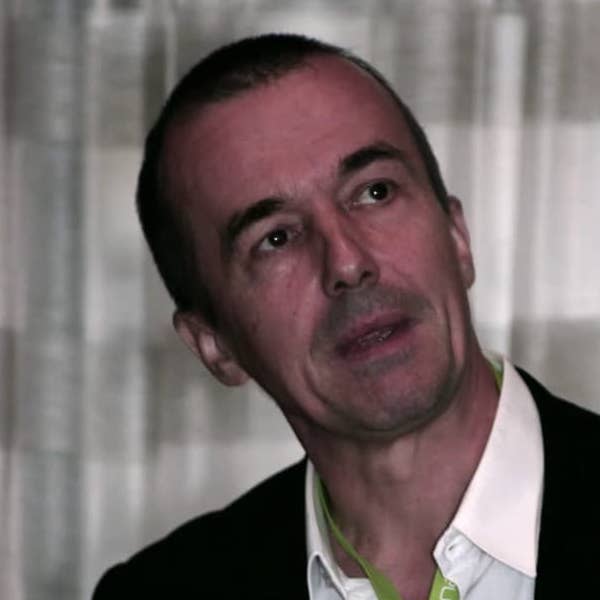
Rainer Gatz, MD
Anesthesiologist at Lasarettet i Ystad,Ystad, Sweden